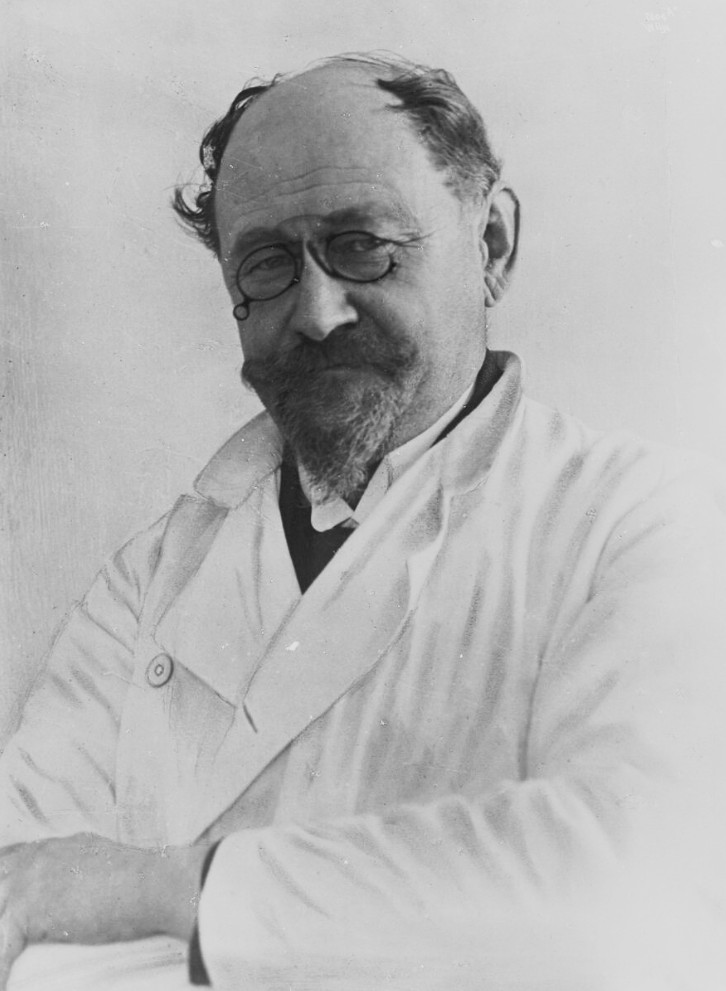
When one is to write about beer and beer fermentation in the Norwegian Malt Beer Chronicle, it is hard to get past the late Dr. Olav Sopp, who did pioneering work in mycology (the study of fungi) around the turn of the twentieth century. On my bookshelves I have collected a number of his more than 50 books and papers.
Dr. Olav Sopp (1860–1931) writes himself that even from childhood he had taken a lively interest in edible mushrooms and their nutritional value. From 1885 he studied mycology in Germany and at the Carlsberg Laboratory in Copenhagen. At that laboratory, Professor E.C. Hansen had carried out his fundamental investigations into yeast fungi, which had led to the use of pure cultures in beer brewing. Fermentation could henceforth be carried out more reliably than before, in an age when wild yeast wreaked havoc in Europe's breweries.
After the Copenhagen stay, Dr. Sopp was appointed head of the physiological laboratory at Ringnes Brewery in Kristiania, and introduced the same procedure at this brewery too. He can therefore in many ways be characterised as "the father of modern beer" in Norway. Later he also studied edible mushrooms, and was much concerned with sensible diet in the broadest sense.
Dr. Sopp must have been an extraordinarily colourful figure. His original name was Olav Johan Olsen, but as a nationally known mushroom and yeast specialist he applied to the Ministry of Justice in 1907 for permission to take the name Olav Sopp ("sopp" being Norwegian for "fungus")! The application was granted.
He was a keen and undaunted opponent of prohibition. In his answer to the questionnaire for the first edition of Hvem er hvem (Who's Who), he says in 1911: "I have regarded it as my life's task in writing and speech to work in every way for the spread of knowledge of the useful and harmful, large and small fungi — their use as useful, their suppression as harmful (diseases) — as well as to work for a better diet and, above all, to fight for individual freedom. In this I have come into conflict with the prohibition people, whom I regard as my mortal enemies, whom I take for insane monomaniacs, representatives of the most harmful trend of our time, which I have sworn to fight as long as I can wield a pen."
Even though Dr. Sopp championed the proper use of pure yeast in industrial brewing, he was also greatly concerned with preserving old methods of producing food, beer and wine in the rural districts. He has therefore described malt-beer brewing in detail in a series of books. Juniper-berry beer and ginger beer are also mentioned, as well as the old Russian drink kvass.
Probably the great majority of malt-beer brewers use hops, which give the beer a fresh taste and aroma. Very many grow hops themselves — in the old days, nearly every farm had its own hop garden. Many still grow their own hops, while others buy them ready-made. In some countries there are large hop plantations, especially in the USA, the United Kingdom, Belgium, Germany and Yugoslavia.
It is the hop flower that is used in brewing. In this flower are found tiny grains of a resinous substance. This substance gives not only the typical, slightly bitter taste, but also contributes substantially to better keeping of the beer.
Trials are now under way with the cultivation of Norwegian hop varieties. The man behind these trials is Åsmund Karlsen of Planteforsk. The Norwegian Malt Beer Chronicle will report fully on these trials as soon as a report is available.